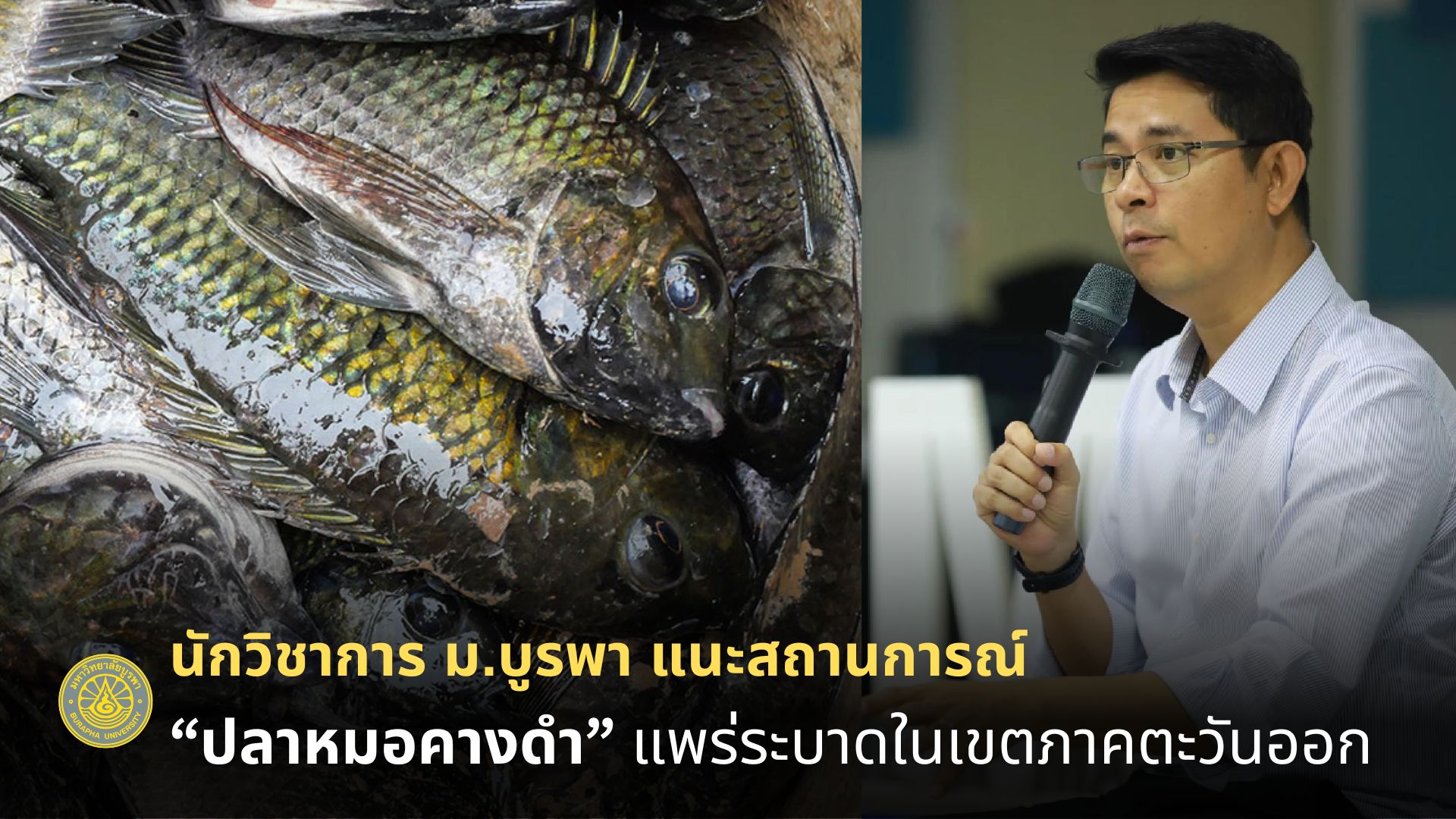
The widespread invasion of blackchin tilapia in various water bodies, from Samut Songkhram, Samut Sakhon, and Samut Prakan provinces to the southern and eastern regions, has significantly impacted fishermen and aquaculture farmers. If this invasive species is not urgently controlled and eradicated, it will cause severe damage to agriculture, the economy, ecosystems, and natural resources.
Dr. Sarawut Siriwong, Acting Vice President for the Chanthaburi Campus of Burapha University, has revealed the situation of the blackchin tilapia invasion in the eastern region, particularly in Chanthaburi province, and has suggested prevention and eradication measures.

How concerning is the current situation of the blackchin tilapia invasion in Thailand?
The current situation of blackchin tilapia in Thailand is very alarming. Studies and data collected by the Department of Fisheries and other agencies have shown that blackchin tilapia can now be found from the southern to the eastern regions along the Gulf of Thailand coastline. Aquaculture areas have been invaded and affected by blackchin tilapia, resulting in significant losses for shrimp farmers, who have lost entire ponds of shrimp. This situation is considered a crisis for the country.
Thailand has experienced invasions of other alien species in the past. Why are we so concerned about the blackchin tilapia invasion now?
There are two types of alien species. The first type invades but does not threaten native species, so it may not be a major concern as it can be easily controlled. However, many other species can invade and threaten native species, causing damage to local ecosystems. Blackchin tilapia falls into the latter category, which is why we need to take serious action. In the past, blackchin tilapia has already caused significant damage to farmers and ecosystems.
What are the potential impacts if the blackchin tilapia invasion spreads to the eastern sea?
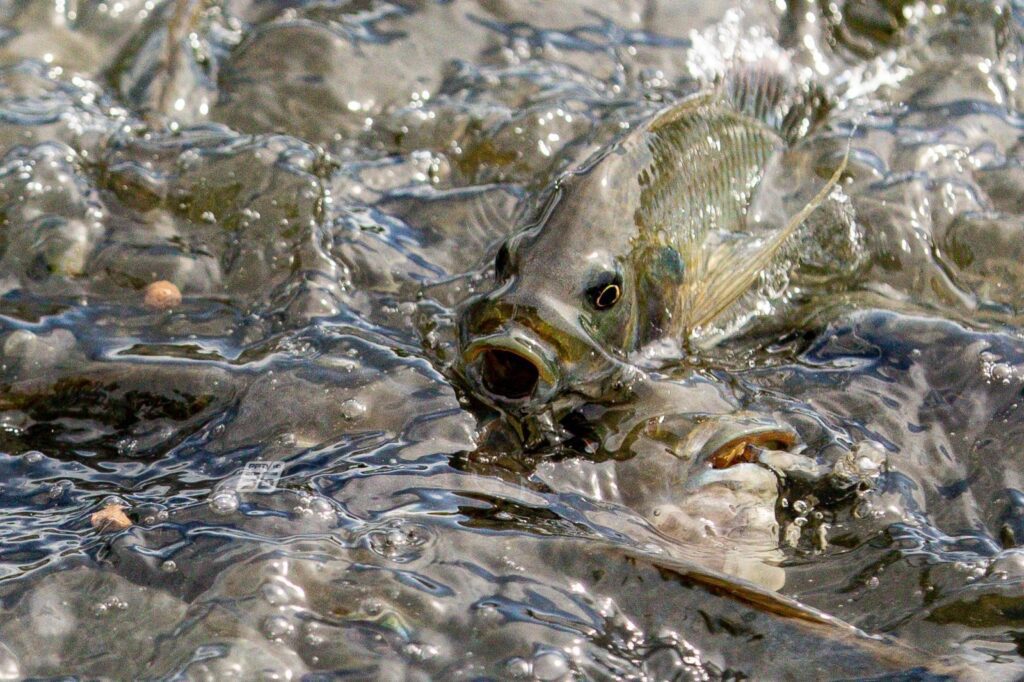
Blackchin tilapia has been reported in Chonburi, Rayong, and Chanthaburi provinces. In Chanthaburi province, even in the Kung Kraben Bay, one of the most complete ecosystems in Chanthaburi, students from the Faculty of Marine Technology, Burapha University, along with the Department of Fisheries and the Department of Marine and Coastal Resources, have found a large number of blackchin tilapia during their surveys. Local fisheries officials reported catching dozens to hundreds of kilograms of blackchin tilapia in a single day in the area. This shows that blackchin tilapia has already invaded the area. The concern is that blackchin tilapia can thrive in environments ranging from freshwater to full-salinity seawater, although they prefer coastal or brackish water. Therefore, the invasion can occur in almost any ecosystem in Thailand. If fishermen are unfortunate enough to encounter blackchin tilapia in their closed aquaculture ponds, the fish can consume almost everything in the pond.
What are the possible solutions to the blackchin tilapia problem in Thailand?
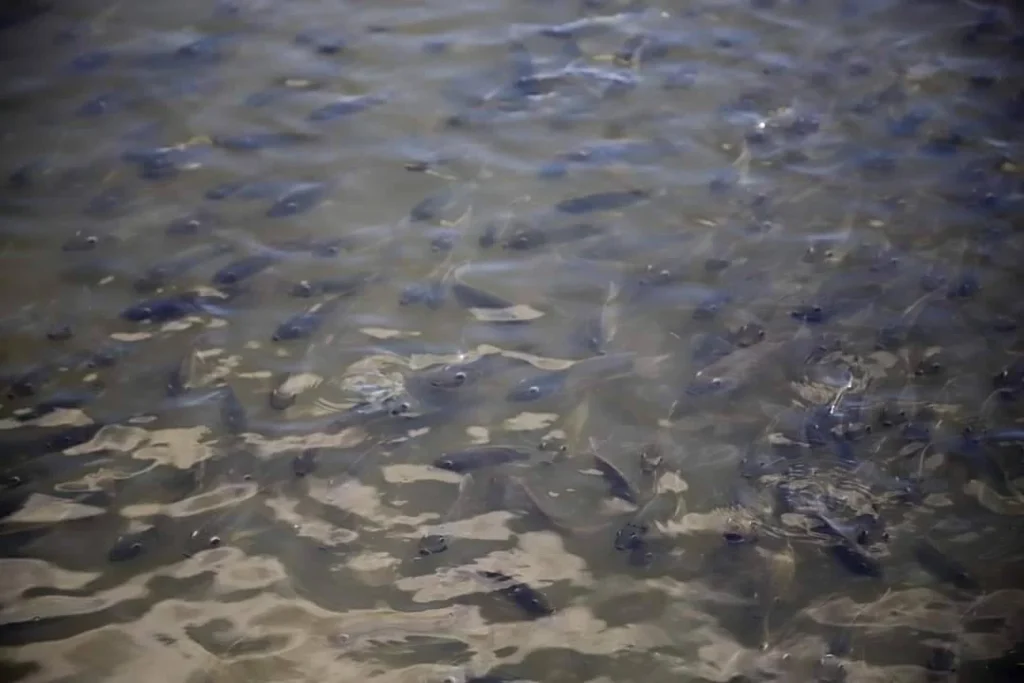
Normally, if an alien species enters an ecosystem that is still abundant, it would be very difficult for the species to spread rapidly. However, this is only possible if our ecosystems are healthy. The fact that blackchin tilapia can spread widely indicates that our natural barriers have been compromised or destroyed. Therefore, the first priority is to remove as many blackchin tilapia as possible from the natural environment until it reaches a level that can be controlled by natural means. This is the main objective, and we can see that the Department of Fisheries and related agencies are trying to implement a policy to buy back blackchin tilapia to encourage fishermen to catch them and earn income, while also removing the fish from the natural environment as quickly and as much as possible, with the hope of reducing the population to a manageable level. Another approach that must be done concurrently is to restore ecosystems, release predatory fish that can consume blackchin tilapia, and create natural enemies for the invasive species. Ecosystem restoration is essential. We must not destroy the environment and must help to restore mangrove forests to promote biodiversity. This will help in the long run.
How can the government, private sector, and local people help solve this problem if blackchin tilapia invades the eastern sea?
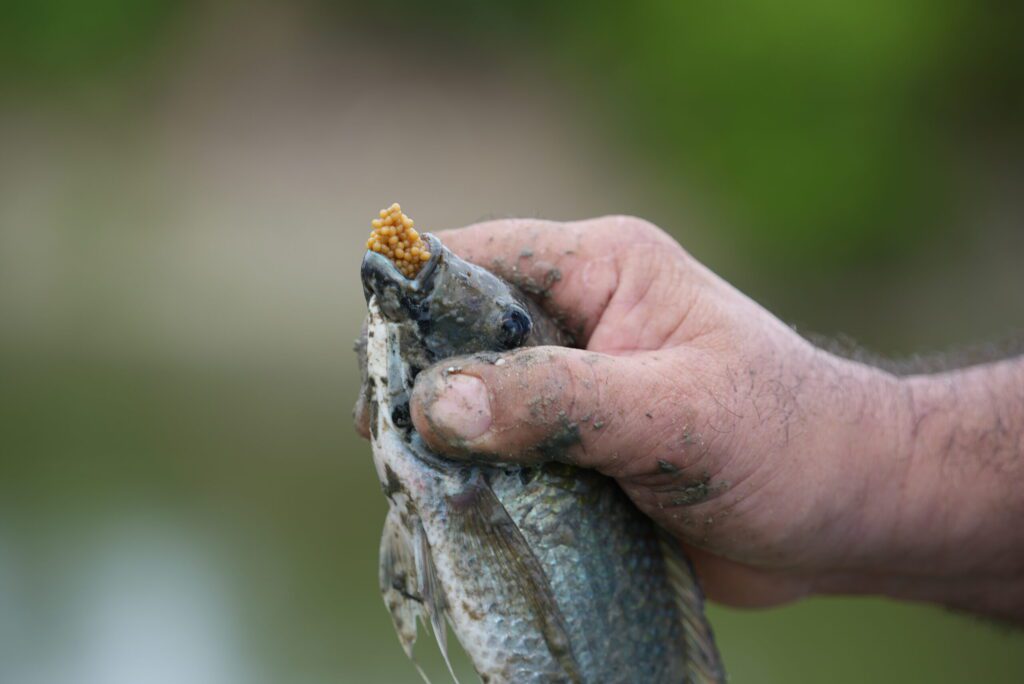
The first step is to remove as many fish as possible from the natural environment, which the government is already doing. If the private sector is interested in helping by purchasing larger quantities and finding other uses for the fish, that would be another approach. For the general public, such as fishermen, if they catch blackchin tilapia, they should not release them back into the water. If they cannot do anything else, burying them is the easiest option or they can use them for food. The most important thing to understand is that blackchin tilapia is dangerous because it can reproduce very quickly, with a generation time of only 22 days and a single spawning event producing 300-400 eggs. The concern is that if the fish are moved or transported in any way, they can spread to other areas. Therefore, it is important to help catch them and not move them anywhere. Dispose of them on-site, whether by cooking them or any other method, but do not allow them to return to the water. This is something that needs to be understood as soon as possible.
Can blackchin tilapia be consumed?
Blackchin tilapia can be consumed. The meat is relatively small and firmer than other fish, but if it is freshly cooked, it tastes like regular fish. However, eating it is not a direct solution to the problem. It is important to understand that consuming the fish is simply a way to utilize it, but what we really need is to remove it from the natural environment as quickly as possible. Currently, the Department of Land Development has been disposing of captured fish by using them as fertilizer, which is a more efficient way to dispose of large quantities of fish.
For the general public, if they find blackchin tilapia in nearby water bodies, what should they do?
First, if you find blackchin tilapia and are not a fisherman who can catch fish yourself, you can report it to the relevant agencies such as the Department of Marine and Coastal Resources or the Department of Fisheries. You can also inform fishermen in the area about the location of the fish. If you catch the fish, do not move them to other locations. Dispose of them on-site to reduce the spread. Finally, it is important to understand that blackchin tilapia is dangerous because it can reproduce very quickly.