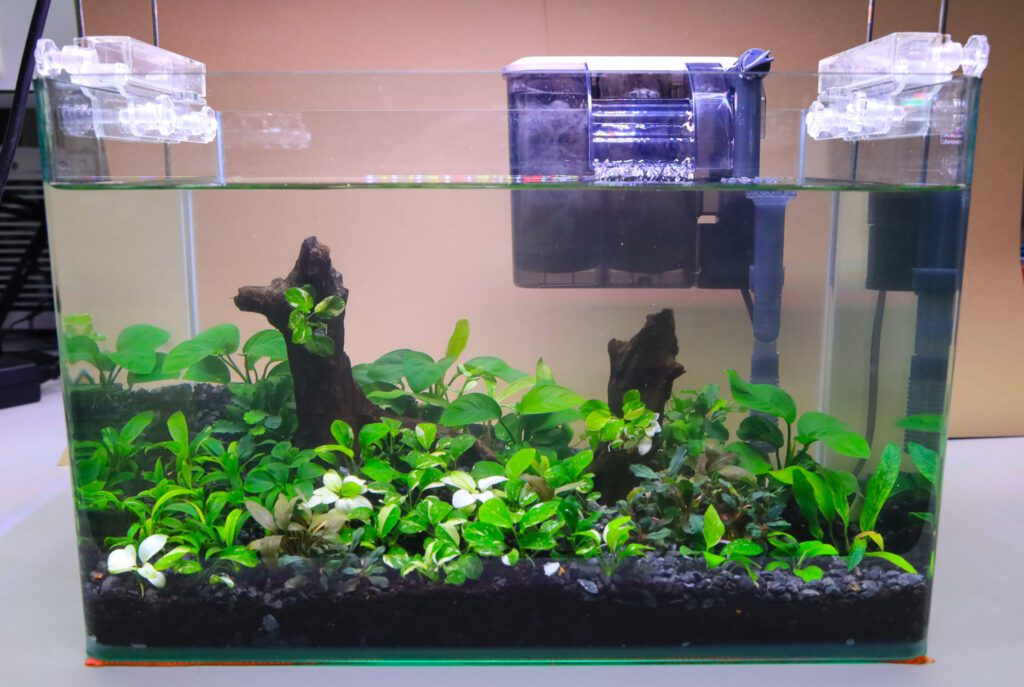
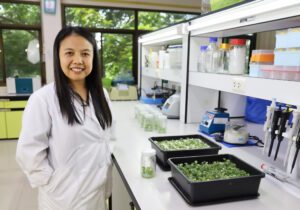
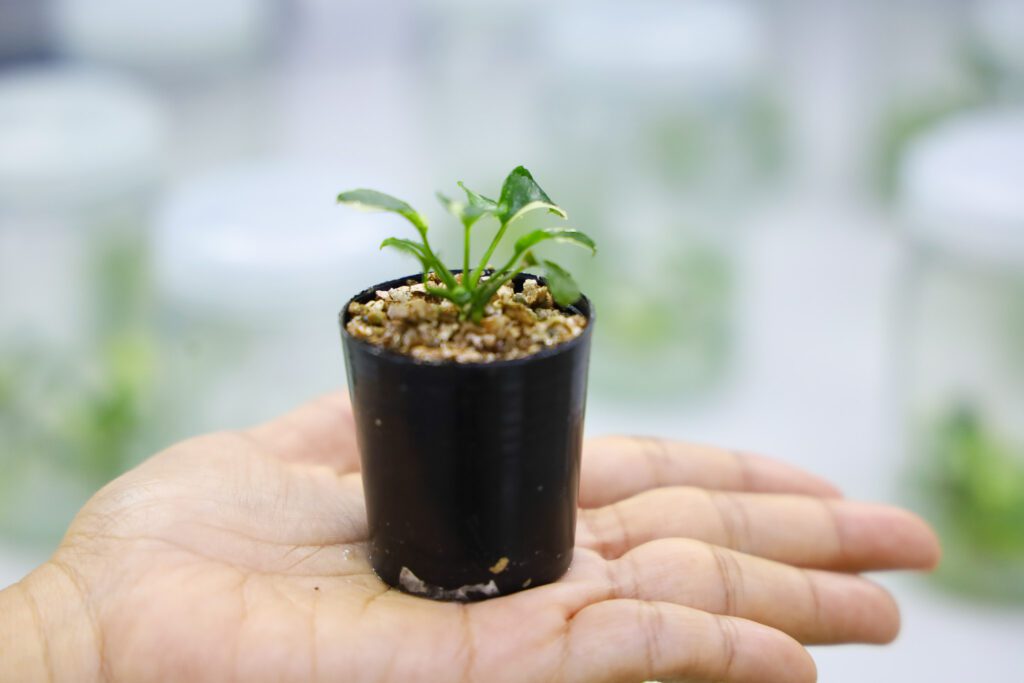
Assoc. Prof. Dr. Chanakan Lakkhana (Ajarn Nan), a lecturer in the Agricultural Innovation Program, Faculty of Agricultural Technology, Burapha University, Sakeaw Campus, and a renowned researcher in tissue culture and aquatic plants, introduces us to aquatic plants and the Anubias barteri Nana ‘Marble’ species.
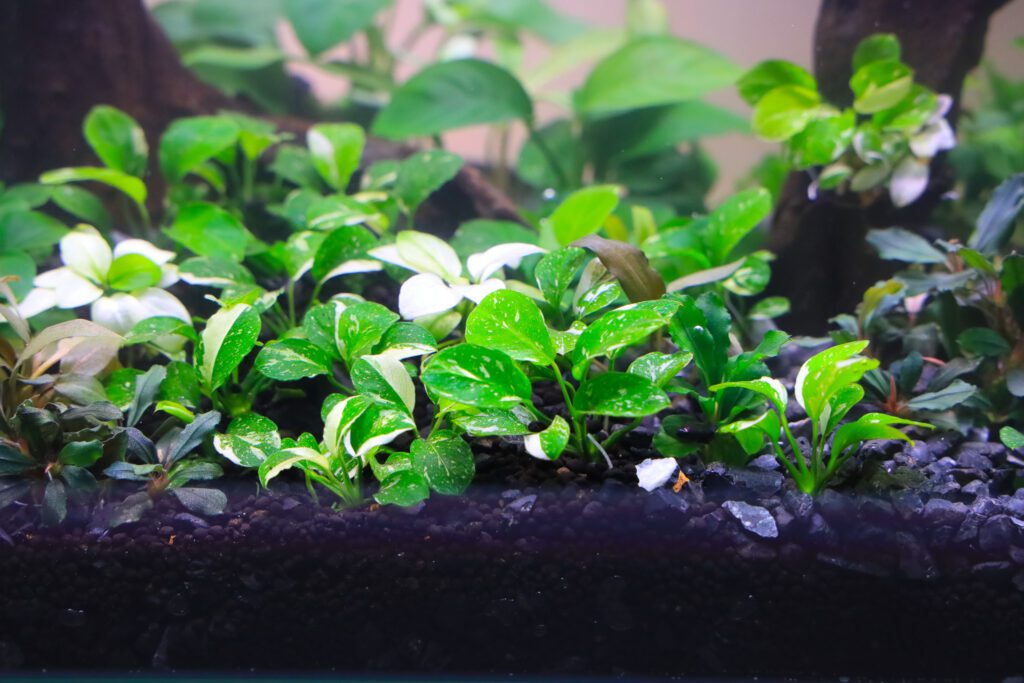
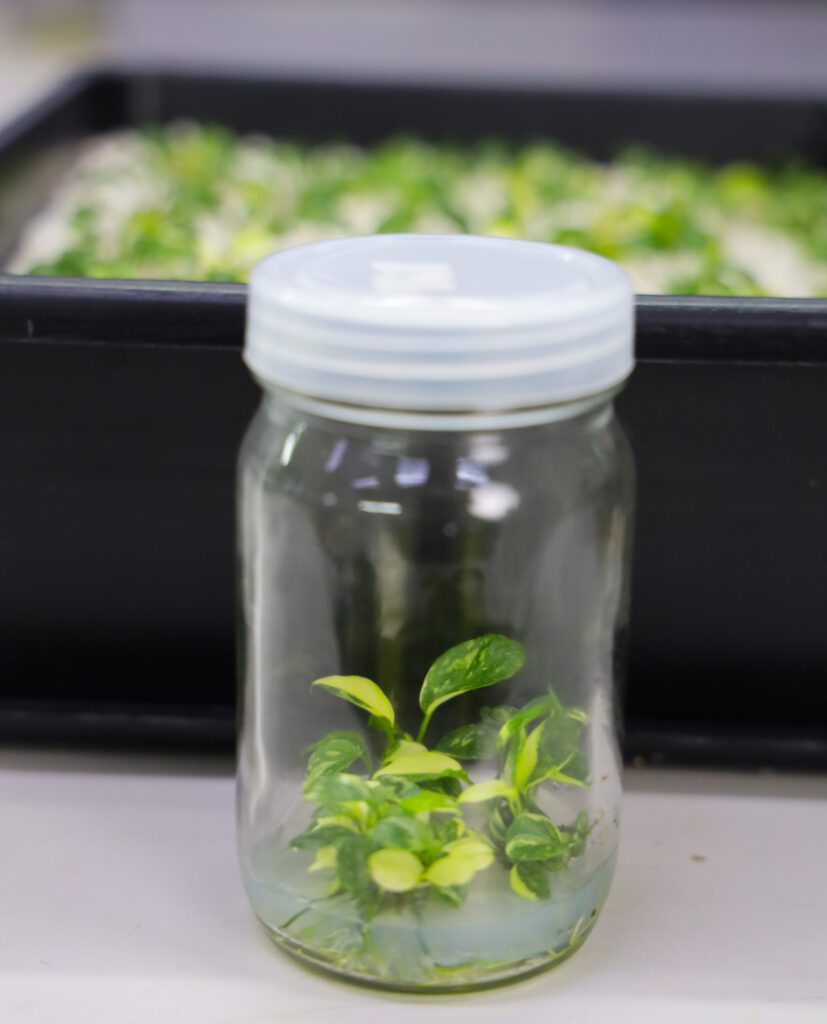
Aquatic plants are plants used to decorate fish tanks, plant aquariums, or planted in terrariums (glass jar gardens). There are many varieties of aquatic plants, and Anubias barteri Nana ‘Marble’ or variegated Anubias is one of the most sought-after varieties in both domestic and international markets due to its variegated leaves, making it aesthetically pleasing and highly marketable. However, this species of aquatic plant grows slowly, and natural propagation is also relatively slow because the variegated leaves have white areas without chlorophyll, reducing photosynthesis efficiency, which affects plant growth and development.
What is Tissue Culture?
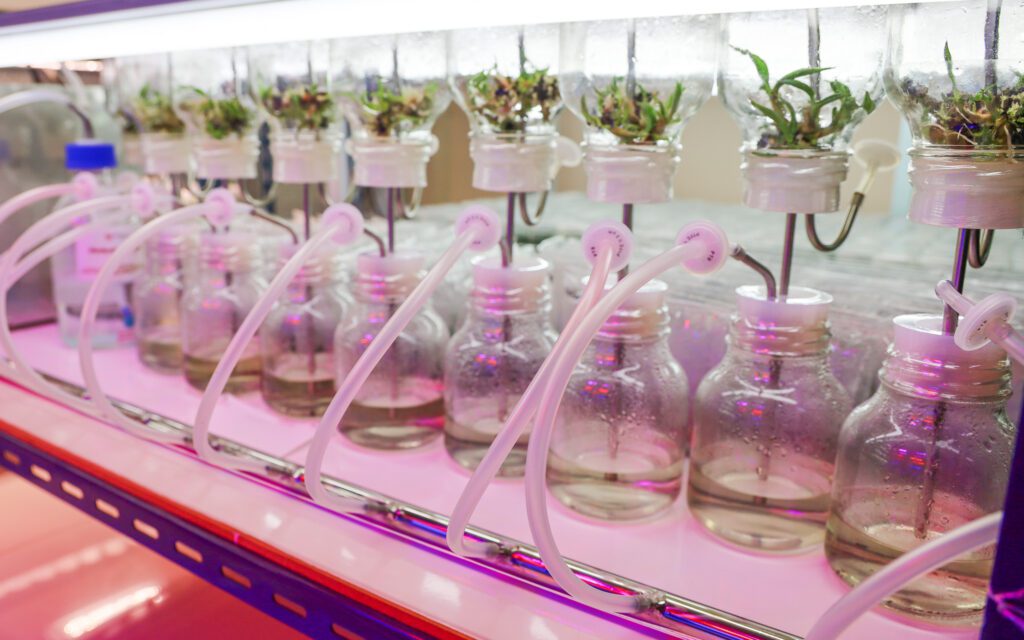
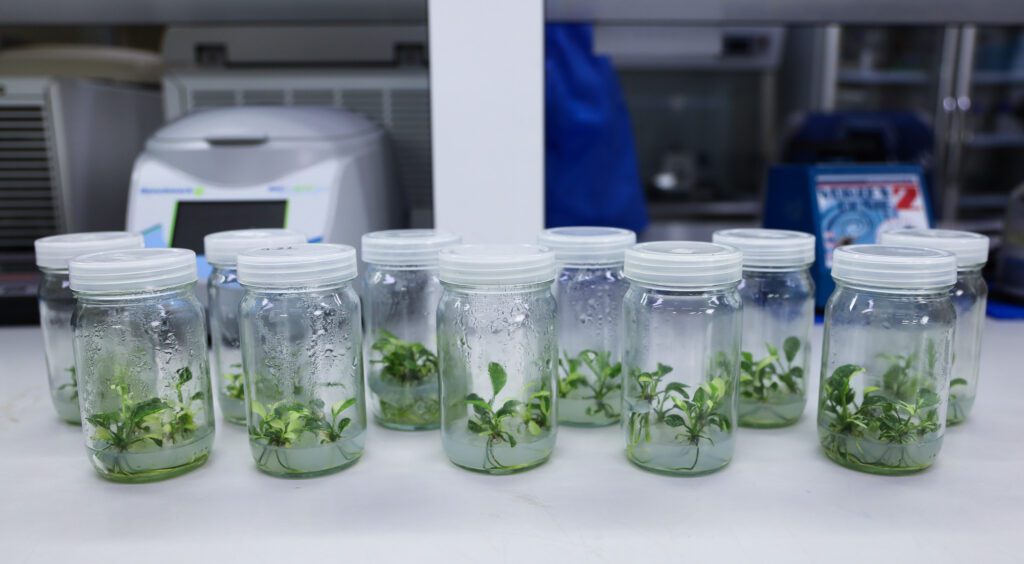
Tissue culture is the propagation of plants using small pieces of tissue cultured in a bottle with a nutrient formula containing essential elements for plants, both primary and secondary nutrients. These cultures are then grown in climate-controlled rooms. In fact, tissue culture technology has been used for hundreds of years.
How is Tissue Culture Technology Used in Agriculture?
In Thailand, the first agricultural application of tissue culture was for orchids. Since orchids take a long time to propagate naturally, tissue culture was used to propagate them in the laboratory. In addition, tissue culture has been applied to many other economic crops such as sugarcane, oil palm, and medicinal plants.
What is Unique About the Professor’s Research Compared to Previous Tissue Culture Studies?
The professor’s research focuses on aquatic plants, especially the Anubias genus. If you have ever kept fish, you would have seen this type of plant in a fish tank. This is the current focus of the professor’s research. Normally, Anubias species grow very slowly when propagated naturally, which is insufficient to meet market demand.
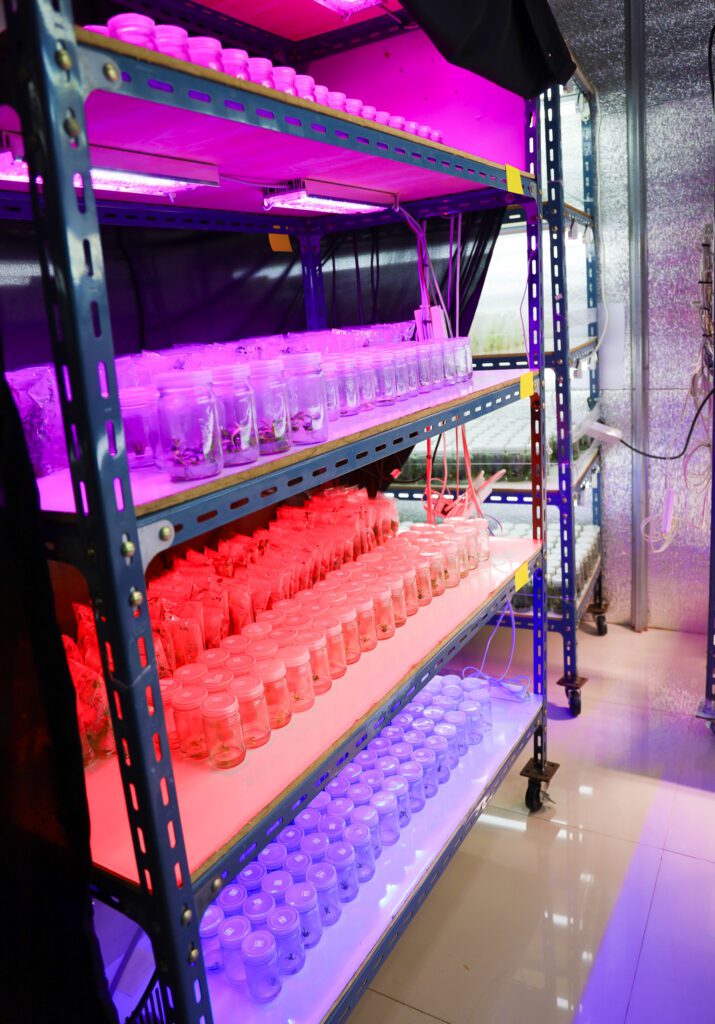
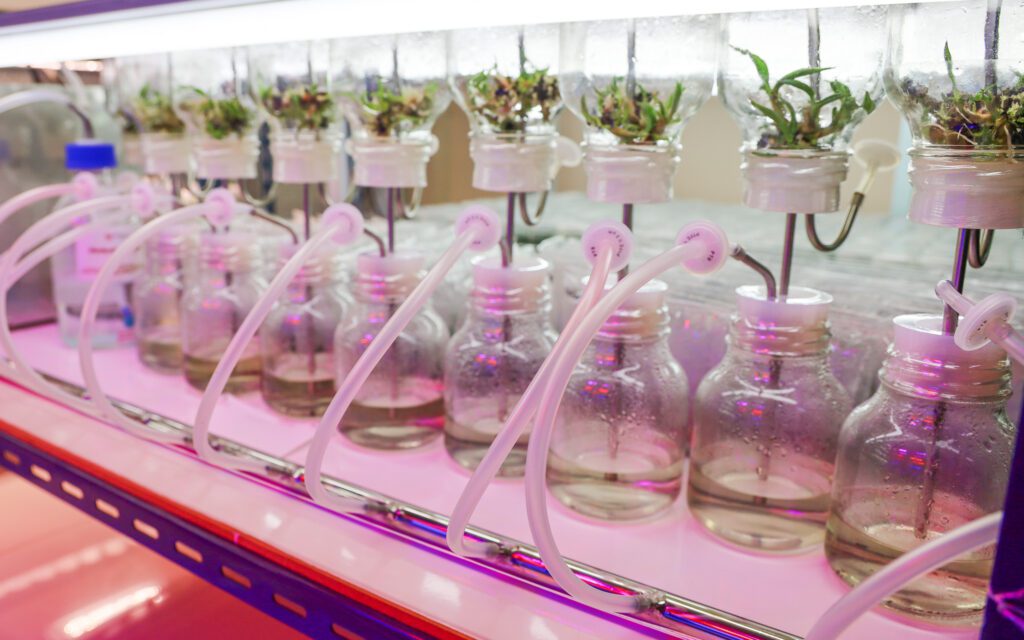
The professor and researchers from the faculty, who have expertise in tissue culture of economic plants, have applied this technique to study the use of different light colors to promote the growth of aquatic plants. Since light is one of the factors that stimulates photosynthesis and plant development in a sterile environment, the wavelength of light has different effects on plant tissues.
If the appropriate type of light for the growth of this aquatic plant can be found, it will make the propagation of this aquatic plant through tissue culture successful, allowing for a higher number of plants to be produced than through natural propagation. Therefore, we use tissue culture techniques, which take less time but can produce a large number of plants and require less space. Even with limited space, it can be cultured without the need for a large farm.
What is the Current Demand and Price for Anubias Aquatic Plants?
The current demand for Anubias aquatic plants is very high because they are aquatic plants that grow in tropical regions and cannot be propagated in cold areas. Therefore, Thailand is a suitable area for propagating this type of plant. Additionally, there is a high demand for ornamental fish in Thailand, and setting up fish tanks requires the use of this type of plant. As for the price, green aquatic plants in Thailand are priced at around 50 baht per plant. However, for the variegated Anubias that the professor is researching, the price will be higher. If exported, the price can double, from 50 baht to 300-400 baht, which indicates high market demand. This is why the demand for Anubias aquatic plants is currently very high.
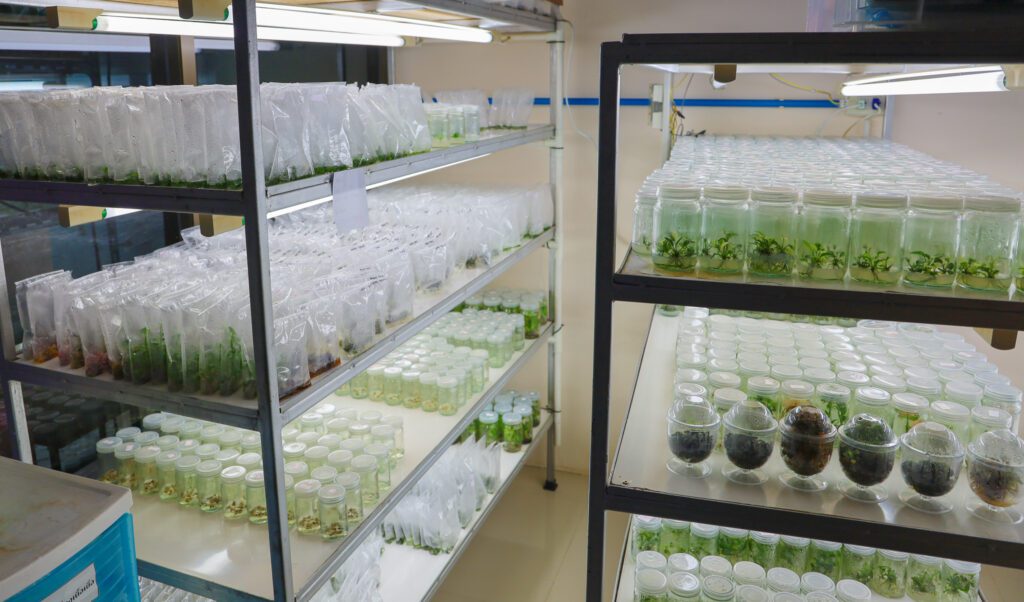
What Program Should I Study if I Want to Learn about Tissue Culture Techniques for Agriculture? For tissue culture in the Agricultural Innovation program at the Faculty of Agricultural Technology, Burapha University, Sakeaw Campus, we offer a course on tissue culture of economic plants and medicinal plants. If you are interested in taking this course, in addition to learning about the propagation of aquatic plants, we also teach about other economic crops such as sugarcane, coconut, and oil palm. We also teach propagation because, as we know, the amount of active ingredients in naturally propagated medicinal plants cannot be controlled.
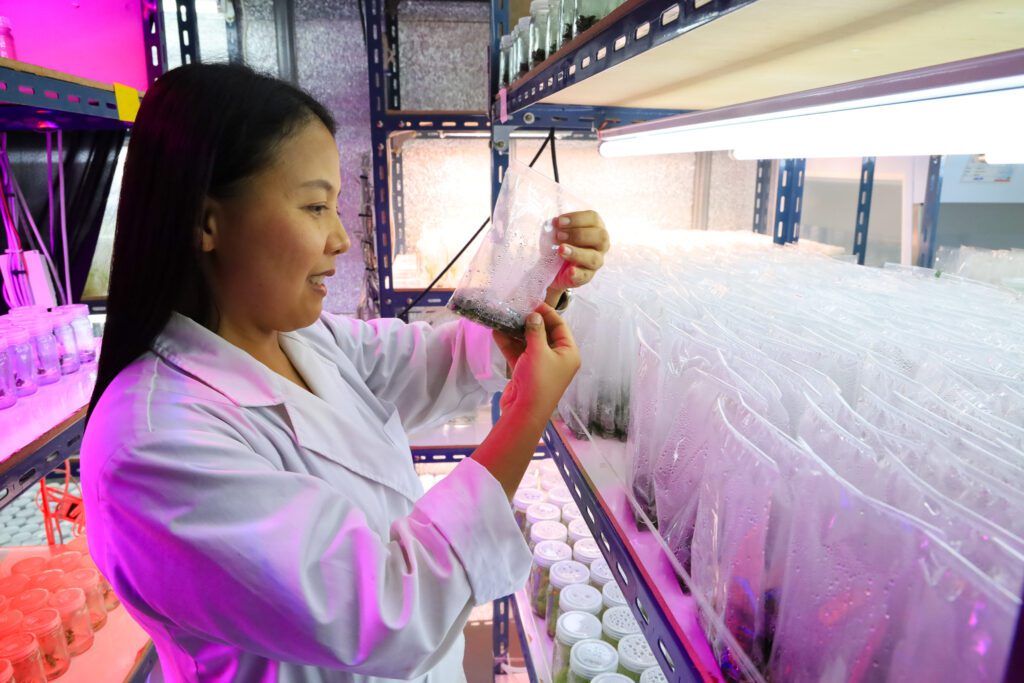
If you want to start a company in the future and produce medicinal plants with a constant amount of active ingredients, tissue culture is a technique that can be used to solve this problem and ensure a consistent amount of active ingredients. You can be sure that upon graduation, you will be able to do it and be successful.
For students interested in applying to the Agricultural Innovation program at the Faculty of Agricultural Technology, Burapha University, Sakeaw Campus, you can inquire at the Facebook Fanpage of the Faculty of Agricultural Technology, Burapha University, Sakeaw Campus.
Faculty of Agricultural Technology
Tel. 037 261 802
www.sakaeo.buu.ac.th